
Auckland’s commercial locksmith for offices, retail sites, and multi-door business premises. Minimise downtime and keep your premises secure without disruptions.
Available nights, weekends and public holidays
We come to your home or business
Proudly Kiwi owned and Auckland based
Over 250 reviews and counting
A locksmith “emergency” is any situation where access, security, or safety is compromised and waiting creates real risk. In Auckland, emergencies often occur outside normal hours- late nights, early mornings, weekends, or at closing time- when delays can increase stress and lead people to take actions that cause damage to doors, frames, and locks. An emergency locksmith response is designed for urgent decision-making: restoring entry, preventing further damage, and securing the property so you can regain control quickly and safely.
You should consider calling an emergency locksmith when you are locked out of your home and cannot safely wait, when a business lockout stops operations or leaves assets exposed, or when a lock is jammed, broken, or failing in a way that risks you being trapped outside- or unable to secure the door properly. Emergency urgency also applies when there is a clear security risk: keys lost in circumstances where they may be traced back to your address, a break-in where locks or frames are damaged, or a door that will not lock outside business hours.
Emergency scenarios we handle (residential and commercial) include:
A responsible emergency provider will triage quickly when you call: where you are, what access point is involved, whether anyone is vulnerable or unsafe, and whether the property is currently unsecured. The goal is not to interrogate you- it’s to reduce panic and prevent avoidable damage. One of the most common escalation mistakes in emergencies is forcing a door, which can splinter frames, bend hardware, and turn a lockout into a larger security failure. If you’re unsure whether it’s “urgent enough,” use this test: if waiting increases safety risk, security risk, or operational risk, it’s an emergency locksmith situation.
Emergency locksmith work must solve two things at once: the immediate access problem and the security consequences that follow. Essential Locksmiths Ltd provides emergency-only services across Auckland for homes and businesses, focusing on restoring entry and securing doors after failures, damage, or risk events. In a lockout, the objective is to regain entry with minimal disruption and ensure the door re-secures correctly once you’re inside. In a lock failure, the objective expands: identify why the mechanism failed, restore controlled access, and confirm the property can be secured immediately after the fix.
Emergency work is not “one-size-fits-all,” because the risks differ by context. A residential lockout can involve children, elderly family members, medication access, or personal safety concerns when waiting outside. A commercial lockout can involve staff safety, cash handling, stock exposure, alarms, and the need to restore controlled access quickly to avoid operational downtime. Break-in response adds an additional layer: the priority is not just entry, but restoring secure closure and reducing the chance of repeat access.
Our emergency services are explicitly scoped to urgent home and business access and security, including:
Where an emergency incident transitions into broader, non-urgent security work, the next step should be routed correctly. This prevents confusion, keeps the emergency entity clean, and stops the emergency page from cannibalising non-emergency service intent. Use these pages when the situation is stabilised and you need planned follow-up service:
In an emergency, you shouldn’t have to explain the same situation repeatedly. The best outcome is a resolved emergency, a secured door, and a simple plan for what comes next- without turning a crisis into a sales conversation.
If you need an after hours locksmith in Auckland, Essential Locksmiths is available 24 hours a day, 7 days a week, including nights, weekends and public holidays. Perhaps you have arrived home and cannot get through the front door, your business will not lock properly at closing time, or a broken or jammed lock has left your property unsecured. Our mobile locksmith comes to you across Auckland, including Auckland Central, the North Shore, South Auckland, West Auckland and Rodney.
When you call after hours, we keep things straightforward. Tell us where you are and what has happened, and we will assess what is needed before heading out. Where possible, we aim to restore access without unnecessary damage and will explain the work and likely costs before major work goes ahead. If the lock has failed or your security has been compromised, we can repair or replace the lock so your home or business can be secured again.
In an emergency, “coverage” is not a slogan- it’s operational readiness. Essential Locksmiths Ltd provides emergency locksmith response across greater Auckland with service-area clarity at the parent-region level so you can quickly confirm whether you’re within reach. Because response times can vary with traffic, time of day, weather, and concurrent emergencies, it is not responsible to guarantee a fixed arrival time. What matters is triage, clear safety guidance while you wait, and dispatch as soon as practical based on your exact location and urgency level.
We cover Auckland across the following parent-level areas:
If you’re in an emergency on the North Shore or in South Auckland, use the location routes below to confirm the right coverage context and communicate your exact suburb and situation clearly during the call:
Operational clarity also includes what happens after you call. A well-run emergency response usually follows a simple logic: confirm the problem and access point, identify immediate safety risks, understand whether the property is currently unsecured, and then dispatch with the tools likely to resolve the issue with minimal damage. For lockouts, the priority is restoring entry while protecting frames and hardware. For lock failures, the priority is restoring controlled access and ensuring the lock can secure the door reliably after the work is done. For break-ins and forced entry, the priority is urgent securing so the property can be locked and made safe again.
One of the most common “hidden” costs in emergencies is avoidable damage caused by forced entry attempts by the occupant. Damaged frames, bent hardware, and broken cylinders can turn a simple lockout into a larger security issue. In Auckland, where peace of mind is the true outcome people need, the best emergency action is often to pause, keep yourself safe, and call for professional help rather than escalating the damage.
In a crisis moment, trust is built through predictable behaviour, transparent boundaries, and calm, competent communication. Essential Locksmiths Ltd positions emergency locksmith service as a professional duty: you call because something has gone wrong, not because you want to be sold extra hardware under pressure. That means the emergency approach must prioritise safety, property integrity, and clear options rather than pressure tactics. The goal is to restore secure access first, then explain what was done, what the door and lock can reliably do now, and what follow-up is recommended only if needed.
Emergency trust also depends on scope clarity. When providers blur unrelated service types on one page, customers lose confidence and the response path slows down. This emergency page is intentionally focused on the emergency entity: home and business lockouts, lock failures, and urgent securing after break-ins or forced entry. That focus makes it easier for customers- and for AI answer systems- to understand exactly who this service is for and when to call.
Core trust signals we reinforce in our emergency process include:
Trust also includes how uncertainty is handled. If a lock is damaged or the door has been forced, the right behaviour is to explain what can be secured immediately, what might require follow-up, and how to keep the property safe in the meantime. If keys are lost with a security risk, the right behaviour is to discuss practical security-reset options so you can sleep or close your premises knowing the door will lock reliably. In an emergency, the value is not just entry- it’s restored control and restored security.
“Mobile locksmith” describes how a locksmith delivers service (travelling to your location), not why you need them. Most locksmith work is mobile by nature because locks and doors exist at the property. The problem is that “mobile” can become a vague umbrella label that mixes urgent and non-urgent intent. In a crisis moment, that vagueness creates hesitation and can delay action. It can also create cannibalisation between pages in search and AI answer systems that are trying to match intent precisely. This page prevents that confusion by clearly defining the emergency entity and separating it from the delivery-model entity.
An emergency locksmith is defined by urgency and risk. You need immediate help because you are locked out, a lock has failed, there has been forced entry, or the property cannot be left unsecured. Emergency work involves triage, rapid decision-making, and often a security reset after access is restored. A mobile locksmith, by contrast, can include scheduled or non-urgent work where the primary goal is planned improvement: lock upgrades, planned replacements, rekeying, and maintenance at a convenient time. Both can be performed on-site, but the intent and risk profile are different.
To avoid confusion and ensure you reach the right service in Auckland, use this emergency page for urgent situations, and use the dedicated mobile service page when your requirement is location-based delivery but not necessarily urgent:
If you’re unsure which applies, ask yourself: Is there immediate risk if I wait? If yes, it’s an emergency locksmith scenario. If no, and your main need is on-site delivery at a convenient time, mobile service is the better match. Keeping these intents separate protects decision-making during emergencies and keeps the site’s entity graph clean and unambiguous.
Emergency locksmith pricing should be clear enough that you can make a calm decision even when you are stressed. Ethical emergency service starts with upfront clarity: what the call-out covers, how labour is generally charged, and what factors can change the final cost (for example, lock type, damage level, or whether replacement parts are required). Exact pricing varies by situation, but the principles should not change: no hidden fees introduced after work begins, no surprise add-ons that weren’t discussed, and no pressure to agree to work you don’t understand.
Safety is also operational. A professional emergency locksmith should take reasonable steps to confirm they are assisting the rightful occupier or an authorised representative- especially for homes and business premises. This protects you, your property, and your wider community. Identity verification is not “red tape”; it’s a trust mechanism. In break-in response, safety includes restoring secure closure, checking that the door can lock reliably again, and making sure any temporary securing is clearly explained if a full repair requires follow-up.
If keys are lost with a security risk, emergency work often includes lock repair or replacement so the property is secure immediately after entry. If a break-in has damaged locks or frames, emergency work focuses on making the property safely lockable again before you leave, sleep, or close for the night. In every case, pricing and safety should move together: clear expectations, clear consent, and a secure outcome.
Trust in emergency locksmith service is earned in real moments: a household locked out late at night, a business that cannot lock up at closing time, or a property that needs urgent securing after forced entry. While every situation is different, customers consistently want the same outcome: calm communication, a clear plan, and a result that restores safety without creating unnecessary damage. Emergency trust is not only about arriving- it’s about how the locksmith behaves under pressure and whether the final result leaves the door secure.
Because we cannot ethically manufacture testimonials, the best approach is to evaluate real customer feedback where it exists and look for patterns that indicate reliable emergency behaviour. In emergency contexts, meaningful reviews often mention responsiveness, clear explanation of options, respectful conduct, and a secure final result. They also often highlight what did not happen: no pressure, no upselling, and no hidden fees.
When you evaluate an emergency locksmith provider, look for review patterns that signal emergency competence:
Emergency testimonials are strongest when they reference the emergency type- lockout, lock failure, break-in securing- because that demonstrates performance under urgency, not only on planned work. If you’re comparing providers in a crisis moment, don’t over-optimise: prioritise scope alignment (home and business emergencies), clarity, and a provider that communicates calmly and professionally. If you want to confirm you are speaking to the right emergency contact point right now, use:
If you’re locked out, dealing with a lock failure, or securing a property after forced entry, act now to restore safe access and secure control of the door. Essential Locksmiths Ltd provides 24/7 emergency locksmith support across Auckland for home and business lock emergencies- within the emergency-only scope defined on this page.
Call an Emergency Locksmith Now.
Request Immediate Assistance.


A commercial locksmith keeps your premises accessible to the right people and secured against the wrong ones. If your office has regular staff changes, it’s common for keys to go missing and key systems to fall out of control.
Business lock problems can be serious – staff locked out before opening, a door that won’t secure at close, or customers noticing a lock that clearly isn’t working properly. At Essential Locksmiths, our commercial locksmiths can restore access, secure the premises, and fix the underlying cause so it doesn’t happen again.
Our commercial services are built around the day-to-day challenges Auckland businesses actually face:
Two of the most common commercial security gaps come from a door that doesn’t latch properly at the end of the day, and keys that weren’t returned when someone left.
After-hours security matters because most incidents happen at the edges of operating hours – right at close, or overnight when the premises are empty. Our commercial locksmiths can restore secure closure, confirm the lock is working reliably, and tell you honestly whether the underlying hardware issue is likely to happen again.
We also handle rekeys that remove any uncertainty about access, restore proper access for current staff, and leave no ambiguity about who can still get in.
We also help with:
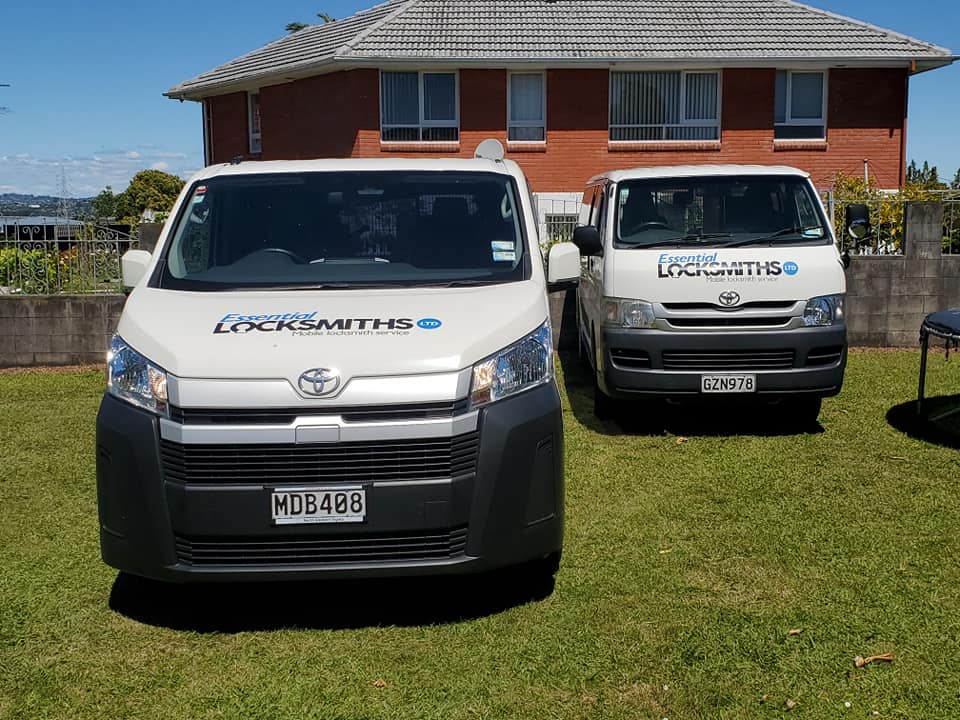
Our team is trusted by commercial businesses across Auckland for a few reasons:
Commercial and residential locksmith work have different requirements. Business premises involve more doors, more users, more access changes, and higher stakes when something goes wrong.
In a workplace, access is usually role-based – staff areas, management areas, restricted internal spaces, and public-facing entry points all need different levels of control. That’s why solutions like master key systems exist: they cut down on key clutter while keeping access boundaries clear between roles.
Commercial hardware also takes far more punishment. A lock in a busy retail premises might cycle hundreds of times a day, so our focus is on keeping your systems reliable under that kind of traffic.
If you’re looking for residential services instead, head to our residential page.
We provide commercial locksmith services across Auckland, including Auckland Central, North Shore, South Auckland, West Auckland, and Rodney.
If you’re dealing with an urgent security or continuity issue, we’d recommend contacting our Emergency Locksmith Services rather than waiting for a standard booking.
Whether it’s a lockout, a rekey after staff changes, a master key system, or a security upgrade, we’re here to help.
